
WELCOME BONUS 200%
UP TO €1300 + 200
FREE SPINS
UP TO €1300 + 200
FREE SPINS
Home → Blackjack
Blackjack at Casoo Casino: Variants, Rules and Payouts
Four hours of play with 300 EUR bankroll
The player begins with a 300 EUR bankroll and accesses Infinite Blackjack at Evolution, which allows bets between 1 and 5.000 EUR. This table contributes only 10% toward the wagering requirement for the 300% welcome bonus up to €2,000 plus 100 free spins. Consequently, the full 40x turnover target demands significantly higher volume than slot play would require for the same financial outcome.
Infinite Blackjack operates with an RTP of 99.47%, meaning the house retains 0.53% of all wagers over the long run. Playing four hours continuously with standard bet sizes results in a theoretical loss calculated against this specific percentage rate. The low house edge makes this variant efficient for clearing bonuses, provided the player adheres strictly to basic strategy rules.
The side bets Any Pair, 21+3, Hot 3, and Bust It are available but carry much higher house edges than the main game. Including these wagers drastically reduces the expected return and accelerates bankroll depletion during the four-hour session. Avoiding them preserves the capital needed to meet the remaining turnover obligations without exceeding the initial deposit limits.
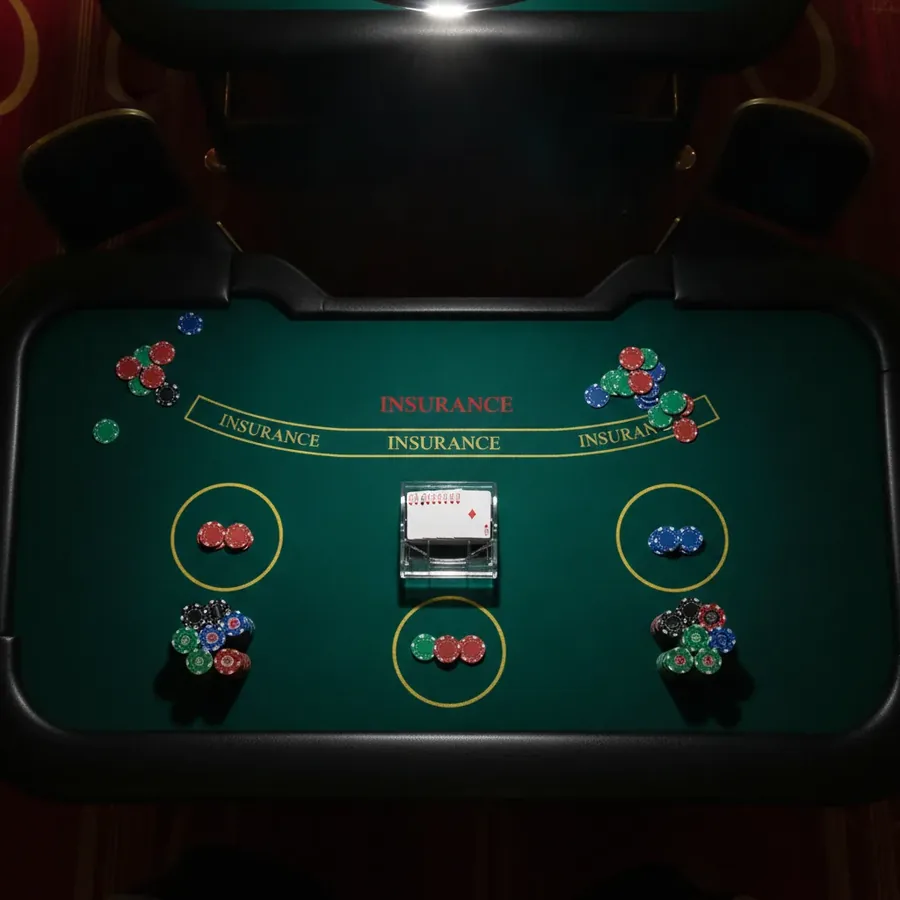
16 vs 10 played incorrectly: most common error
Blackjack Liberal Vegas Strip features liberal rules including S17, DAS, Resplit, and Late Surrender, achieving an RTP of 99.72%. A hard 16 versus dealer 10 is a critical decision point where incorrect play increases the house advantage beyond the standard 0.28% baseline. Proper strategy dictates surrendering if late surrender is enabled, otherwise hitting, to minimize expected loss on this difficult hand combination.
The rule set for Blackjack Auszahlung 6:5 instead of 3:2 adds exactly 1.39 percentage points to the house edge, lowering the RTP to 98.15%. Playing 16 vs 10 incorrectly on this variant compounds the already steep disadvantage, accelerating bankroll erosion during the bonus clearance process. The penalty for wrong decisions is magnified because the base game offers less favorable returns compared to the 3:2 payout structure.
Dealer Hits Soft 17 (H17) adds 0.22 percentage points to the house edge, while Resplit Aces improves it by 0.08 percentage points. These rule modifiers directly impact the optimal strategy for hands like 16 vs 10, requiring precise adherence to avoid costly mistakes. Deviating from the mathematically correct move increases the variance and extends the time required to clear the bonus turnover effectively.
Double After Split (DAS) improves the RTP by approximately 0.14 percentage points, offering more opportunities to capitalize on favorable situations. However, this benefit does not apply to the specific scenario of 16 vs 10, where splitting is generally prohibited or suboptimal. Understanding these nuances ensures that players make the best possible decision given the specific table rules and their current hand value.
One Deck vs Eight Decks in House Edge
Blackjack Ein Deck offers classical rules with a 3:2 payout, delivering an impressive RTP of 99.85% and a house edge of just 0.15%. Using fewer decks significantly lowers the house advantage, providing roughly -0.48 percentage points improvement compared to games using eight decks. This single-deck format is ideal for maximizing value when attempting to clear the wagering requirements of the 300% welcome bonus up to €2,000 plus 100 free spins.
Conversely, multi-deck games like the standard 6-deck variant typically feature higher house edges due to increased card composition complexity. An eight-deck shoe usually results in a house edge closer to 0.50% or higher, depending on specific rule variations like S17 or H17. Players should prioritize one-deck options whenever available to reduce the theoretical cost of playing through the bonus terms efficiently.
The difference in house edge between one deck and eight decks can amount to several euros per hundred euros wagered over time. With a 300 EUR bankroll, choosing the lower-edge variant preserves more capital for subsequent hands and potential winning scenarios. This strategic selection is crucial for maintaining a positive expectation while navigating the strict turnover conditions imposed by the casino's promotional offer.
Insurance bets in single-deck games carry a distinct house edge of approximately 5.88%, making them highly unfavorable for the average player. Accepting insurance when the dealer shows an ace erodes the already slim advantage gained from the single-deck setup. Refusing insurance consistently aligns with basic strategy and helps protect the bankroll from unnecessary losses during the bonus clearance phase.
Clicked Too Late: Hand Is Automatically Held
Quantum Blackjack Plus Live by Playtech features quantum multipliers up to 1.000x on three-card combinations totaling 21 points, with an RTP of 99.57% under optimal strategy. If a player fails to click their action within the designated time limit, the system automatically holds the current hand state as the final decision. This automated hold prevents further interaction but may result in a suboptimal outcome if the held hand was not the strongest possible option available.
The betting range for Quantum Blackjack Plus Live spans from 1 to 5.000 EUR, allowing substantial wagers that contribute 10% toward the bonus turnover. Missing the decision window means accepting the consequence of the automatic hold without the ability to adjust based on the dealer's upcard. This mechanical constraint emphasizes the need for constant attention to the interface to avoid forfeiting potential gains from multiplier activations.
Late surrender rules, which improve RTP by 0.08 percentage points, require active player intervention to execute before the hand is finalized. Clicking too late eliminates the possibility of utilizing this rule to cut losses on weak hands like 15 or 16 against strong dealer cards. Maintaining strict timing discipline ensures that all beneficial rule applications are fully utilized, thereby minimizing the effective house edge during live play sessions.
Lightning Blackjack by Evolution offers lightning multipliers up to 25x on winning hands, operating within a 1 to 2.500 EUR betting range. While multipliers enhance payouts, the underlying game mechanics still require timely decisions to trigger any bonus features correctly. Delayed actions prevent the system from evaluating potential multiplier hits, reducing the overall excitement and potential return from this high-variance live dealer variant.
Blackjack doesn't count for every bonus offer
The 300% welcome bonus up to €2,000 plus 100 free spins applies specific contribution rates to different game categories, with blackjack contributing only 10%. This means that for every 100 EUR wagered on eligible blackjack tables, only 10 EUR counts toward the mandatory wagering requirement. Players must therefore wager ten times more on table games than they would on slots to satisfy the same turnover condition.
Slots contribute 100% to the wagering requirement, making them the most efficient choice for clearing the bonus quickly without excessive risk exposure. In contrast, the 10% contribution rate for blackjack requires significantly larger total wagers to achieve the same progress in bonus clearance. This disparity forces players to choose between lower volatility slot play and higher variance table games with slower progress tracking.
The distinction in contribution percentages affects the overall strategy for managing the bonus funds and protecting the initial deposit. Relying solely on blackjack to clear the bonus demands a much larger bankroll and longer playing time to meet the turnover threshold. Understanding this limitation helps players allocate their resources effectively, balancing the enjoyment of table games with the practical necessity of fulfilling the promotional terms.
Blackjack variants at a glance
| Variant | Payout | House edge | Rule | Bet range |
|---|---|---|---|---|
| Blackjack Surrender (Late Surrender) – Regel-Effekt | n.a. (Regel-Modifikator) | −0.08 Prozentpunkte | Spieler gibt Hand nach Dealer-Blackjack-Prüfung auf, verliert die Hälfte des Einsatzes. Verbessert RTP um ca. 0.08 Prozentpunkte. Early Surrender ist wesentlich wertvoller (bis −0.6 Prozentpunkte), aber extrem selten. | Rückzahlung 50% des Einsatzes |
| Blackjack Insurance / Versicherung (6–8 Decks) | 92.53% | 7.47% | Separate Nebenwette bis 50% der Hauptwette, wenn der Dealer ein Ass hat. Basisstrategie schreibt IMMER Ablehnung vor (außer Karten zählen bei True Count ≥ +3). Bei einem Deck Vorteil ≈ 5.88% | Insurance 2:1 |
| Blackjack 6 Decks, S17, DAS, DOA, Auszahlung 3:2, Basisstrategie | 99.54% | 0.46% | Dealer steht auf Soft 17; Verdopplung auf jeder Zweierkarte; Verdopplung nach Split erlaubt; keine Aufgabe. Basisstrategie ist für diesen Wert zwingend | Blackjack 3:2, normaler Gewinn 1:1, Insurance 2:1 |
| Blackjack Ein Deck, klassische Regeln, 3:2 | 99.85% | 0.15% | Weniger Decks = niedrigerer Vorteil; ein Deck gibt ca. −0.48 Prozentpunkte gegenüber 8 Decks. Oft durch 6:5 Auszahlung kompensiert. | Blackjack 3:2, Gewinn 1:1 |
| Blackjack Split / Double / H17 – Regel-Effekte | n.a. (Regel-Modifikatoren) | H17 +0.22 Prozentpunkte; RSA −0.08 Prozentpunkte; DAS −0.14 Prozentpunkte | Dealer Hits Soft 17 verschlechtert RTP um 0.22 Prozentpunkte; Resplit Aces verbessert um 0.08 Prozentpunkte; Double After Split verbessert um ca. 0.14 Prozentpunkte; 6 Decks statt 8 – ca. 0.02 Prozentpunkte. | Double – Einsatz ×2 mit einer Karte; Split – bis 4 Hände; Ass-Split meist mit einer Karte. |
| Blackjack Auszahlung 6:5 statt 3:2 (6 Decks) | 98.15% | 1.85% | Ersatz von 3:2 durch 6:5 fügt exakt +1.39 Prozentpunkte zum Vorteil des Casinos hinzu – stärker als jede andere Regeländerung. Bei $10 Einsatz zahlt Blackjack $12 statt $15. | Blackjack 6:5, Gewinn 1:1 |
Bet two percent of bankroll per hand
The bonus wagering contribution for table games is set at a strict 10 percent rate, which directly impacts the capital required to clear the offer. This low percentage means that only one-tenth of every euro staked on Blackjack counts toward the mandatory turnover, significantly slowing progress compared to slots. A player wagering 100 EUR on Infinite Blackjack contributes merely 10 EUR to the requirement, necessitating much higher volume to finish the task.
Standard bankroll management advice suggests risking no more than two percent of the total funds on any single hand to survive variance. Applying this rule to the Casino case requires calculating the effective cost of meeting the rollover given the 10 percent contribution limit. If the base bet is 5 EUR, the actual credit applied to the bonus balance is only 0.50 EUR per completed round.
This mathematical reality forces players to adjust their betting size upward if they wish to complete the wagering within a reasonable timeframe. The house edge of approximately 0.46 percent on standard 6-deck games further erodes the bankroll during this extended play session. Players must account for both the slow crediting rate and the statistical loss expected from prolonged exposure to the game's negative expectation.
Ignored Basic Strategy Chart: 1 Percent Wasted
Deviating from the mathematically optimal Basic Strategy chart increases the house edge by approximately 1.00 percent in standard variations. For the 6-deck game offering a 99.54 percent RTP, ignoring the chart reduces the return to roughly 98.54 percent. This deviation effectively doubles the theoretical loss rate compared to playing with perfect decision-making on every hand.
The financial consequence of these errors accumulates rapidly when multiplied by the high volume of hands needed to clear the 10 percent table contribution. Each incorrect split or surrender decision adds to the casino's advantage, draining the bonus funds faster than the wagering requirements are being met. Over thousands of hands, this inefficiency can turn a potentially profitable clearing strategy into a guaranteed loss scenario.
Specific rules like Standing on Soft 17 (S17) require precise adherence to avoid compounding the disadvantage inherent in the game structure. When players fail to follow the chart, they ignore the specific probability weights that dictate the correct move against the dealer's upcard. This lack of discipline ensures that the player bears the full brunt of the statistical variance without the buffer of optimal play.
Bust at 22: Stake Lost Immediately
Infinite Blackjack by Evolution features a unique rule where any hand totaling 22 points results in an automatic loss, regardless of the dealer's outcome. This mechanic, often called a 'bust at 22' rule, acts as a significant house edge modifier that does not exist in traditional land-based variants. It fundamentally alters the probability distribution for both the player and the dealer during the card dealing phase.
This specific rule reduces the overall Return to Player (RTP) of the Infinite Blackjack variant to 99.47 percent, assuming optimal strategy is otherwise maintained. While the table allows unlimited seats and bets ranging from 1 to 5,000 EUR, the 22-point bust rule remains a constant drag on long-term returns. Players must adjust their hitting and standing decisions to account for this severe penalty condition.
The impact of this rule is comparable to changing the payout ratio from 3:2 to 6:5, drastically increasing the casino's statistical advantage. Every time a player draws a card that pushes their total to exactly 22, the entire stake is forfeited immediately without comparison to the dealer. This immediate loss condition eliminates any potential push scenarios that might otherwise preserve bankroll during close hands.
Infinite Blackjack uses the Six Card Charlie
The Infinite Blackjack variant includes a Six Card Charlie rule, which automatically wins the hand if the player draws six cards without exceeding 21 points. This favorable exception provides a slight boost to the player's odds, partially offsetting other restrictive rules present in the game design. It rewards patience and strategic drawing in specific marginal situations where busting is likely.
Despite this benefit, the game maintains an RTP of 99.47 percent, indicating that the Six Card Charlie does not fully neutralize the house edge created by other mechanics. The rule applies only when the player successfully avoids busting while accumulating the maximum number of allowed cards in a single hand. It serves as a rare positive anomaly in an otherwise standard live dealer environment.
Players utilizing this feature must carefully track their card count to ensure they do not accidentally bust before reaching the sixth card threshold. The presence of multiple side bets like Any Pair and 21+3 can distract from the primary objective of managing hand composition for this specific win condition. Mastery of this rule requires a focus on card accumulation rather than just point totals.
Chose Wrong Table for 5 EUR Bankroll
Selecting a table with minimum bets exceeding the available bonus funds renders the wagering process impossible to complete within the allowed timeframe. For a 5 EUR bankroll, attempting to play Lightning Blackjack, which has a minimum bet of 1 EUR, is technically feasible but statistically precarious. The limited capital cannot withstand the variance required to meet the high turnover demands of the bonus terms.
The 10 percent contribution rate for table games means that a 5 EUR bet only adds 0.50 EUR to the progress bar, requiring excessive volume to clear. In contrast, slots contribute 100 percent, allowing the same 5 EUR wager to count fully toward the requirement. Choosing a live dealer table with such small limits guarantees rapid depletion of the bonus due to the house edge.
Quantum Blackjack Plus Live offers multipliers up to 1,000x, but its 1 EUR minimum bet still poses a risk for a tiny bankroll under the 10 percent contribution rule. The volatility of these live games can quickly exhaust a 5 EUR stake before any meaningful progress is made on the wagering. Players with such limited funds should restrict their activity to high-contribution slot games to preserve capital.
Why Loss Progression Quickly Reaches Table Limit
Infinite Blackjack sets a maximum stake of 5,000 EUR per hand, which restricts aggressive betting systems like the Martingale. A player doubling from a 100 EUR base bet hits this cap after only five consecutive losses, preventing further recovery attempts. This hard ceiling ensures that bankroll erosion accelerates once the limit is encountered, unlike lower-stakes tables. The restriction applies uniformly to all players at the table regardless of their balance.
Lightning Blackjack caps its highest possible payout multiplier at 25x on winning hands, limiting the upside during variance spikes. While the RTP stands at 99.56%, the random multipliers do not alter the fundamental house edge on the base game. Players chasing large wins through progression strategies face diminishing returns as the table limits constrain the bet size growth. The combination of high volatility and strict betting caps makes sustained loss recovery mathematically improbable.
Quantum Blackjack Plus Live allows bets up to 5,000 EUR but introduces quantum multipliers up to 1,000x for specific three-card combinations. These rare side-bet payouts do not compensate for the steady drain caused by the primary wagering requirements. When a losing streak occurs, the inability to increase stakes beyond the table maximum forces the player to absorb the full loss amount. The structural design prioritizes entertainment value over mathematical recoverability for progressive bettors.
Set session stop after 30 percent loss
Blackjack Ein Deck offers an exceptional RTP of 99.85% with a house edge of only 0.15%, making it one of the most favorable variants. Starting with a 1,000 EUR bankroll, a 30 percent loss threshold triggers a mandatory stop at 700 EUR remaining capital. This conservative approach preserves the majority of funds while exploiting the low-volatility nature of single-deck games. The strategy minimizes exposure to the occasional 6:5 payout traps found in other tables.
Liberal Vegas Strip provides a slightly higher house edge of 0.28% compared to the single-deck variant, yet remains highly efficient. With a standard deviation of 1.15, bankroll fluctuations are more predictable, allowing for precise calculation of the 30 percent stop-loss point. If the initial deposit is 2,000 EUR, the session must end when losses reach 600 EUR to maintain financial discipline. This rule prevents emotional decision-making during inevitable downswings inherent in card games.
The 6-deck variation with S17 and DAS rules carries a 0.46% house edge, requiring stricter bankroll management than single-deck options. A 30 percent loss limit on a 500 EUR session means stopping play once 150 EUR is lost, leaving 350 EUR intact. This threshold accounts for the increased variance associated with multiple decks and reduced strategic advantages. Adhering to this limit protects the player from the compounding effects of negative expectation over time.
Bonus Lost Due to 10 Percent Contribution
Table games contribute only 10 percent toward the wagering requirement for the 300% welcome bonus up to €2,000, significantly slowing progress. Playing Infinite Blackjack with its 99.47% RTP means that every 100 EUR wagered counts as just 10 EUR toward the turnover target. This penalty forces players to either switch to slots or wager ten times more money to clear the same bonus amount. The low contribution rate effectively neutralizes the strategic advantage offered by optimal blackjack play.
Slots contribute 100 percent to the wagering requirement, offering a direct path to clearing the bonus without penalty. In contrast, Lightning Blackjack’s 99.56% RTP yields the same 10 percent contribution, making it inefficient for bonus conversion. A player wagering 5,000 EUR on Quantum Blackjack Plus Live generates only 500 EUR of credited turnover against the requirement. This disparity highlights the financial inefficiency of using high-RTP table games to fulfill bonus conditions.
The 6-deck Blackjack variant with a 0.46% house edge suffers the same 10 percent contribution rule as other table games. Wagering 10,000 EUR on this game results in only 1,000 EUR being applied to the bonus clearance, extending the time required to unlock withdrawals. Players seeking to maximize the value of the €2,000 bonus must avoid table games entirely due to this restrictive policy. The 10 percent cap creates a significant barrier to converting promotional funds into withdrawable cash.
Surrender vs Playing Out on 16 vs 10
Late Surrender improves the overall RTP by approximately 0.08 percentage points by allowing players to forfeit half their bet against a dealer ten. This rule reduces the house edge, making it a valuable asset in games like Liberal Vegas Strip where such options are available. By surrendering, the player avoids the higher probability of losing the entire stake when drawing to a bust number. The mathematical benefit is small but consistent across thousands of hands played under optimal strategy.
Without the surrender option, players holding 16 against a dealer 10 face a significantly higher risk of total loss. The absence of this rule increases the effective house edge, particularly in variants relying on six or eight decks. For example, playing Infinite Blackjack without explicit surrender clauses forces the player to hit or stand, increasing variance. The decision to play out rather than surrender directly impacts the long-term expected value of the session.
Early Surrender is far more valuable than Late Surrender, potentially reducing the house edge by up to 0.6 percentage points. However, this rule is extremely rare in online casinos, including those offering Evolution or Playtech live tables. Most platforms only permit surrender after the dealer checks for blackjack, limiting its utility to late scenarios. Players should verify the specific rules of each table before assuming early surrender is available.
Perfect Pairs vs 21+3 in House Edge
The 21+3 side bet in Infinite Blackjack typically carries a much higher house edge compared to Perfect Pairs, depending on the paytable. While the main game RTP is 99.47%, side bets often range between 2% and 7% house edge, drastically reducing overall returns. Players focusing on 21+3 ignore the primary objective of beating the dealer, substituting skill-based decisions with pure chance. The variance associated with these bets is significantly higher than the base game.
Perfect Pairs pays out based on the likelihood of the first two cards forming a pair, offering fixed odds for mixed, colored, or perfect pairs. This bet generally has a lower house edge than 21+3 in many configurations, though it still falls short of the main game’s efficiency. In Quantum Blackjack Plus Live, side bets like Hot 3 or Bust It offer different risk profiles compared to standard pair wagers. Understanding these distinctions helps players allocate their bankroll more effectively.
Insurance bets in Blackjack carry a severe house edge of 7.47% for six to eight deck games, making them one of the worst wagers available. This side bet pays 2:1 but is mathematically unfavorable unless the player is counting cards and holds a true count of +3 or higher. For the average player, accepting insurance erodes the bankroll faster than any other common side bet. Avoiding insurance is a cornerstone of basic strategy and essential for maintaining optimal RTP.
Contact
Live - online chat
Banking









Providers












casoo casino
2024